FinCremental OS
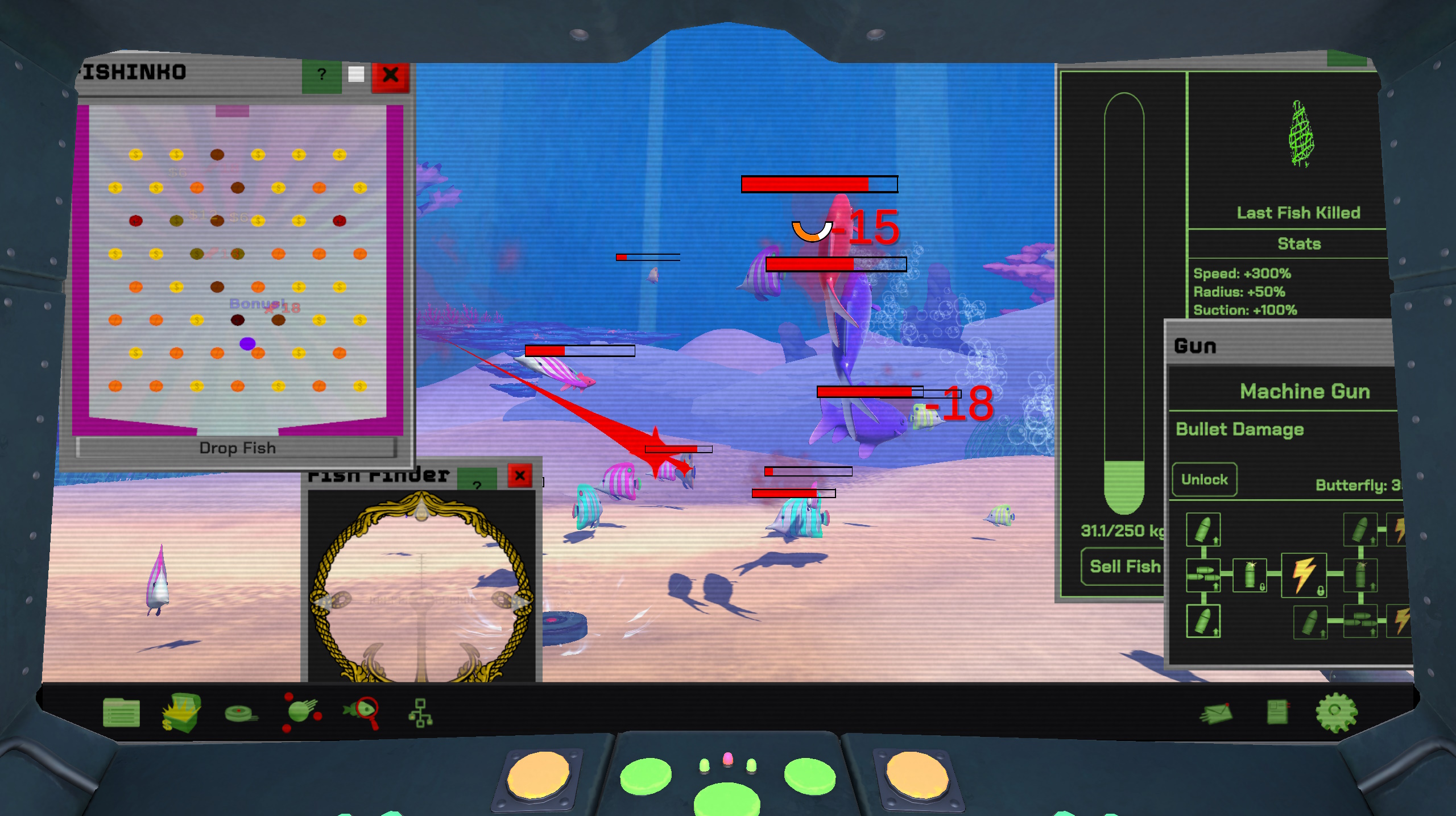
Harvest the ocean for cash while managing your desktop and playing minigames all at once in a hybrid incremental fish shooter and simulated operating system!
Platform: Windows PC
Development period: August 2025 – May 2026
Team Size: 12
Role: Product Owner, Narrative Designer, UX and Mechanics Designer
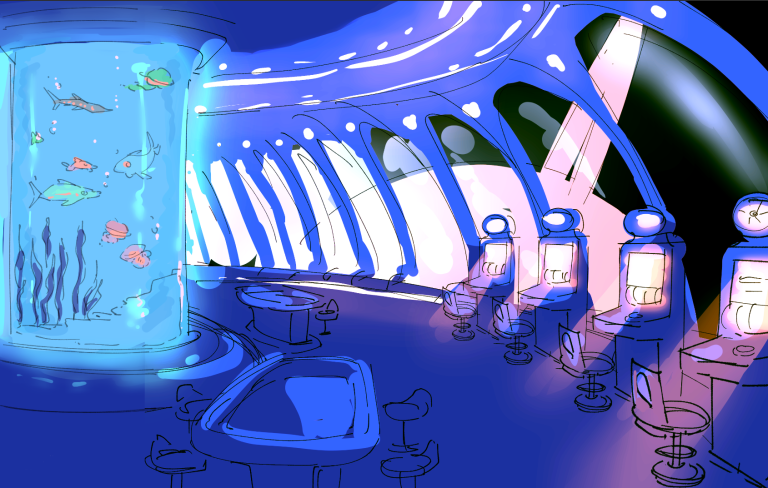
Concept art for the early sci-fi casino version of Fincremental OS, courtesy of Alanna Nguyen-Kenney.
The development process of Fincremental OS highlights a key aspect of my working experience, and that’s adaptability and working around an iterative process with others across disciplines. Much like past projects, other members of the team had a reasonable amount of sway over the whole of the project, creating new elements and modifying existing ones based on their strengths. Unlike past projects, however, Fincremental OS used the flexibility of an Agile workflow to majorly overhaul it’s design throughout the development period: It initially started as a sci-fi fishing game where you would work at a space station casino!

A short demonstration of Fincremental’s shooting, including critical strikes and a lightning blast!
In terms of design choices that I had a direct influence over, I’ve created a number of mechanics that all serve to juice up the player feedback and add to the satisfaction of playing the game. I created a dynamic screenshake system that allows for any object to create screenshake in a multitude of ways. For example, fish actually deal dynamic amounts of screenshake based on how much damage they take. I was also the mind behind the damage number system, which was also made to be dynamic alongside player gameplay.

Gameplay of the Fishinko minigame in action, rewarding money and damaging fish!
I was also in charge of revamping the “Fishinko” minigame, a small side game that players can interact with for bonus rewards while shooting fish. Our games window system, which allows for secondary games to be opened and dragged around the screen freely, presented the unique design challenge of ensuring each minigame feels worthwhile to interact with but not distracting from the main experience. I solved this in the redesign by creating special pegs that fire out missiles as well as allowing players to customize the board to get special effects before each drop. This not only increased the depth of interaction with the minigame, but made it feel more integrated with the base shooting, encouraging players to continue playing while the puck drops down the board.
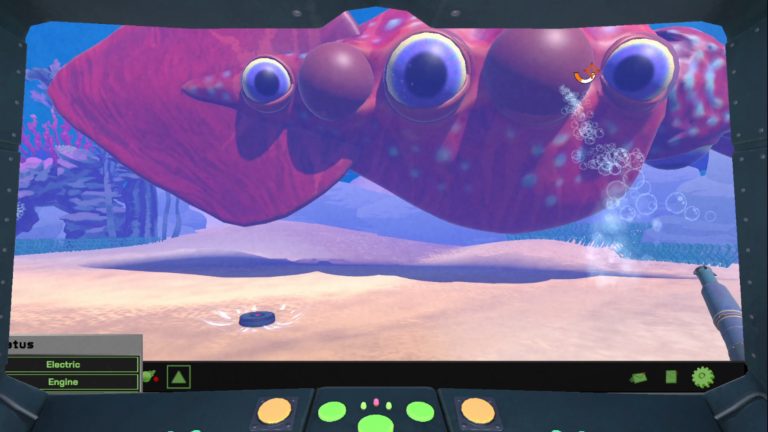
A screenshot of the boss fight in game.
The narrative implementation was also an interesting challenge to overcome. Like the rest of the additions I had made, I wanted it to directly impact the game feel. But how does one do that through nothing but words, especially in the context of an incremental game? The answer that I came to was to use a semi-traditional “quest line” delivered to the player via in-game emails. This quest line doesn’t just outline the players impact on the world through their fish blasting actions, but also has those impacts come back around to the player in the form of a boss fight. The actual narrative through-line is the unfolding of conspiracy involving the submarine you pilot, mirroring the gameplays expanding mechanical complexity.
Two documents I produced for the rest of the team.
All of my work, both in and out of engine, was accompanied by thorough documentation. Two example documents are listed above: On the left is a design document I wrote about how the previously mentioned Fishinko rework should be implemented in game, referenced by both programmers and artists to understand the mechanics behind the game and create assets accordingly. On the right is comprehensive documentation I wrote on how to use a series of in-engine components I made, so that the functionality could easily be picked up and utilized by other designers on the team.
Over all, Fincremental OS serves to highlight my priorities in development, both in working with a team and designing features for direct implementation. The concepts I’ve written for the game went through countless amounts of iteration from the feedback provided by the artists and programmers, but throughout all of it, the core identity and game feel from the initial concepts were never lost in the shuffle. The end result is an engaging incremental game that sets itself apart from other games in the genre and has players hooked from the moment they boot it up.